
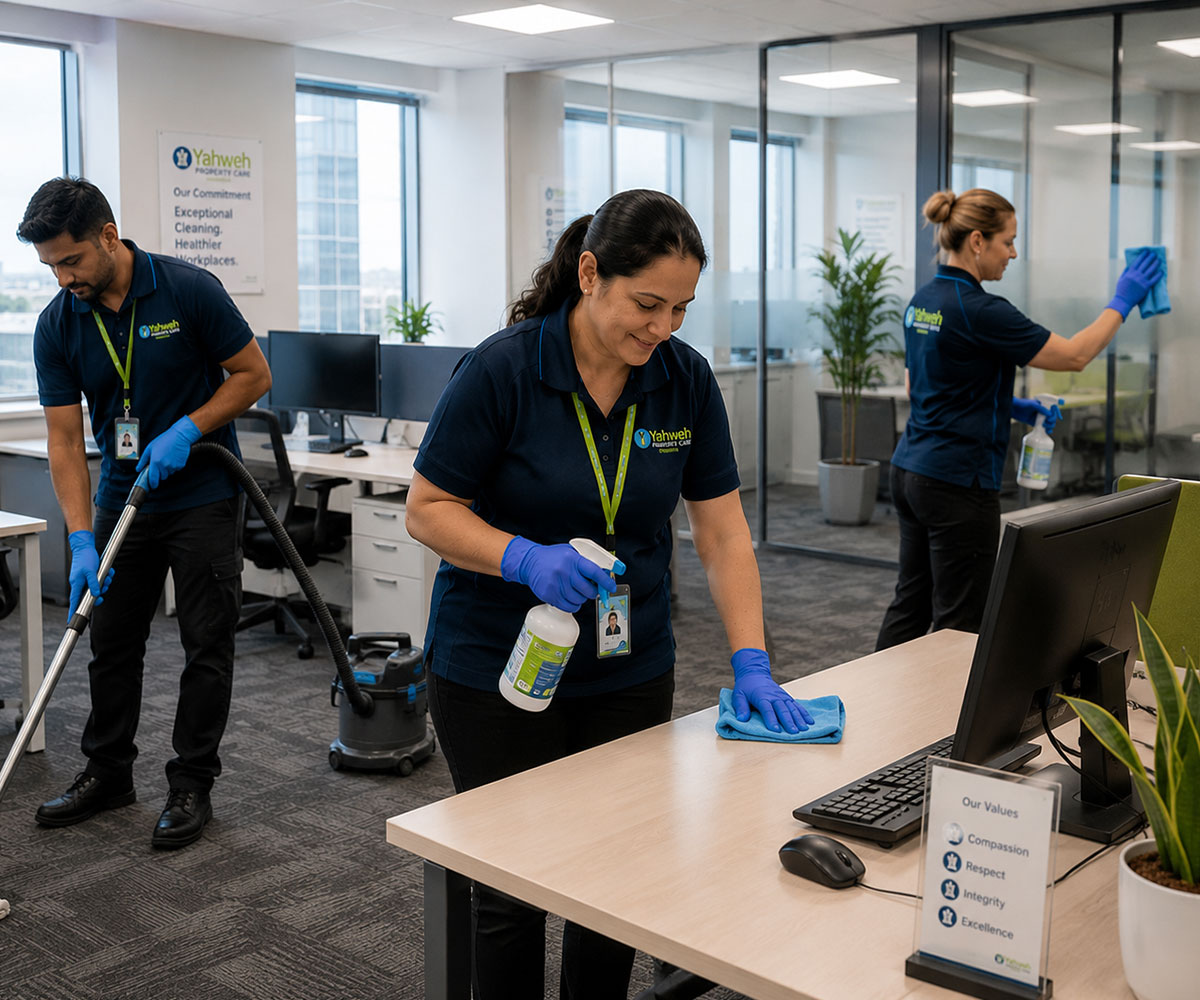
A clean reception area can hide an uneven cleaning routine elsewhere in the building. Upstairs, the microwave needs attention, a meeting room bin has been missed and dust is collecting along the stairwell edges.
A useful Corporate Building Cleaning checklist makes those gaps easier to spot. It identifies the work required in each area, assigns responsibility and separates regular tasks from jobs needing occasional attention.
For Sydney workplaces, the starting point is a walk through the premises. Use the checklist below as a guide, then adjust it to the building’s layout, occupancy and service arrangements.
These spaces collect dirt brought in from outside and receive frequent attention from visitors. Entrance mats need cleaning too; vacuuming around a dirty mat leaves part of the job unfinished.
Regular checklist:
On rainy days, check for water tracked through the doors while people are arriving. It cannot wait for the cleaners’ evening round.
Periodically inspect mat edges, corners and accessible surfaces behind reception furniture. Report damaged mats or flooring so the appropriate person can arrange repairs.
Decide what happens to a desk covered in papers before the first visit. Employees need to know what to put away, and cleaners need to know which belongings to leave alone.
Regular checklist:
Keyboard cleaning can easily become a job everyone assumes someone else is doing. Put it on someone’s list, along with shared phones and other equipment. Follow the equipment maker’s cleaning directions.
Chair bases and desk legs also collect dirt, so give them a place in the occasional cleaning round. Papers and personal items should stay where their owners left them unless another arrangement has been made.
A meeting room may need several checks during a busy day. An evening clean cannot deal with coffee spills that appear before a lunchtime presentation.
Regular checklist:
Agree on who reports problems between bookings. Where refreshments are served, someone needs responsibility for clearing the room afterwards.
Upholstered seating and internal glass may require periodic work outside the regular visit. Include those tasks in the schedule rather than waiting until their condition becomes a complaint. Leave a gap in the room diary for cleaning; five minutes between meetings may not be enough.
Lunch leaves its mark around the sink, on fridge handles and inside the rubbish bin. Fridge shelves are easy to forget until something spills, so decide who cleans inside and when.
Regular checklist:
Ask whether the booking covers the inside of the microwave and fridge. Staff also need a deadline for removing old food. The cleaner should not have to guess whether someone still wants Tuesday’s lunch.
Choose cleaners that suit kitchen surfaces and rinse wherever the label requires it. Add reachable spaces beside appliances to the occasional cleaning list. If reaching behind an appliance means moving something heavy, arrange help rather than expecting a cleaner to shift it alone.
A washroom checklist needs to cover supplies as well as surfaces. Clean sinks are of limited use when nobody can find soap.
Regular checklist:
One evening visit may leave a busy washroom short of soap by lunchtime. Name the person who checks supplies during the day and make sure they know where replacements are kept.
List showers and changing rooms separately if the building has them. Look beyond the obvious surfaces during occasional detailed cleans, especially into corners where residue collects. If water keeps appearing in the same spot, report it for investigation. Mopping it up again will not fix a leak.
Shared circulation areas can fall between tenant and building-management contracts. Confirm responsibility for them before assuming another team will complete the work.
Regular checklist:
Use the cleaning method recommended for the flooring and allow it to dry before reopening the area. Don't leave people walking through an area that's being cleaned. Put up clear warning signs and give them another safe way through until the work is finished.
Add periodic work for stair edges, accessible ledges and skirting boards. Report loose flooring, damaged fittings or other defects. Cleaning teams should not attempt repairs outside their role.
Some tasks need a dedicated booking. Carpet extraction, high windows and difficult-to-access surfaces should have a defined scope and suitable working arrangements.
Restricted plant rooms, electrical cupboards and server rooms also need specific authorisation. Do not include them under a vague instruction to “clean everywhere”.
Give periodic tasks a planned date and a named person responsible for arranging access. This prevents them disappearing behind the daily checklist.
Each task should have a frequency, an owner and a way to record exceptions. If a locked room prevents cleaning, note it and arrange another opportunity.
Yahweh PC provides office and corporate building cleaning services in Sydney. Discuss the areas listed here with the team and confirm which tasks your proposed service covers.
Review the checklist when occupancy or building use changes. It should remain a working document that helps people identify missed jobs and resolve them.
How often should corporate buildings be cleaned?
Busy washrooms, kitchens and entrances may need daily or more frequent attention. For quieter rooms, start with how often people use them and adjust if dirt builds up between visits.
Does office cleaning include windows and carpets?
Ask what the quoted price covers. Vacuuming carpets is often part of a regular visit; a carpet wash or thorough window clean may need its own booking.
Who cleans shared areas in a tenanted building?
Check the landlord’s cleaning arrangements before adding shared spaces to your own booking. Ask about the lifts and corridors by name so neither side assumes the other has them covered.
Should cleaners move items on desks?
Tell the team which items they may move. Employees should put private papers away and leave enough space for the desk to be wiped.
How should missed tasks be handled?
Tell your cleaning contact exactly what was missed and ask when someone can return to finish it. If it happens again, find out what is getting in the way.


 1300-925-355