
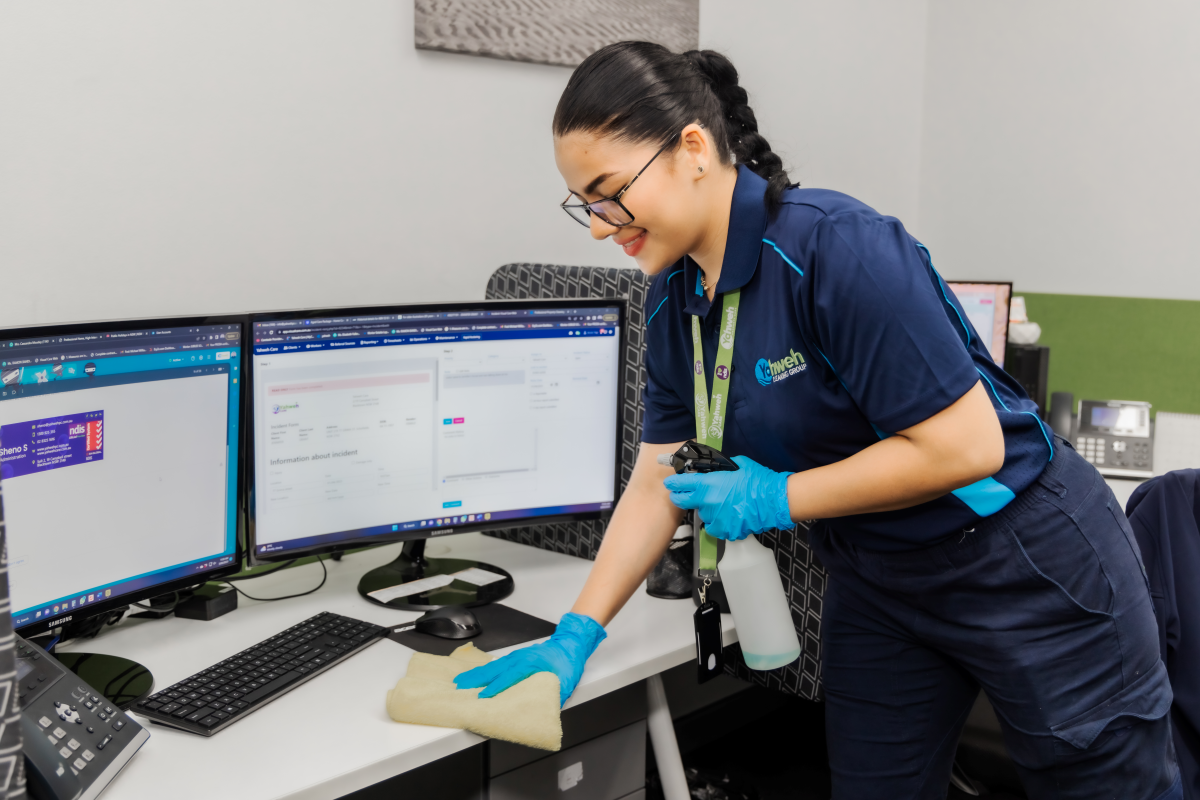
By Thursday afternoon, the kitchen bin is full again. The cleaner came on Monday, but the office has hosted three client meetings and a staff lunch since then.
Across town, another business pays for five visits a week even though most desks sit empty for half of them.
Both situations raise the same question: does the cleaning schedule match the work being done? Some offices need cleaning every day. Others get by with a weekly visit, provided someone takes care of the smaller messes in between. The right choice starts with what happens inside your office.
A daily arrangement usually means a visit on each agreed working day, rather than seven days a week. Confirm that detail when requesting prices.
The cleaner might empty food waste, clean washrooms and wipe kitchen surfaces before attending to busy floors. The exact work depends on the contract. Daily attendance does not mean every shelf, window and carpet receives a detailed clean each evening.
This arrangement can suit offices where shared facilities become dirty quickly. It also gives the team regular opportunities to notice supply shortages or report a developing problem.
Someone still needs to handle urgent spills during the day. An evening booking cannot deal with coffee dropped beside the printer at ten in the morning.
Consider an office where employees prepare lunch every day, visitors use the meeting rooms and several teams share the same washrooms. Waiting a week between professional visits may leave too much work for staff.
Daily cleaning becomes worth discussing when:
These are signs to investigate, rather than a fixed rule based on headcount. Twenty people using one small kitchen can create a different workload from twenty people spread across several floors.
Look at the condition of the premises near the end of a normal day. That tells you more than an inspection straight after the cleaner leaves.
A small office used only a few days each week may not need a full professional visit every evening. If there is little food preparation and few visitors, weekly cleaning may provide enough support.
However, weekly service leaves jobs between appointments. Somebody must remove food waste, wipe spills and check the washroom supplies.
Be honest about who will do that work. “Everyone will help” can become nobody’s responsibility once the week gets busy.
A weekly booking can also allow time for tasks beyond a quick reset, provided the visit is long enough and those tasks are included. Ask what can realistically be completed during the proposed hours.
The kitchen does not have to follow the same timetable as an unused meeting room.
A mixed arrangement might involve brief visits on busy days, with a longer clean once a week. In a tenanted building, the landlord’s contractor may already maintain shared washrooms, leaving your business responsible for its own office and kitchenette.
Check that existing coverage before paying for overlapping work.
For an office with uneven attendance, extra attention after the busiest day may be more useful than spreading identical visits across the week. Discuss the actual pattern with the provider, including events that regularly leave additional mess.
A weekly quote may look cheaper because it includes fewer visits. That does not show whether it covers enough work to keep the office usable between them.
Compare the proposed tasks and total time. Ask whether consumables are supplied, what periodic work costs and how additional visits are charged.
Also consider work being passed to employees. If the weekly arrangement depends on an office manager spending part of every afternoon cleaning the kitchen, include that responsibility in your decision.
A daily quote needs the same scrutiny. Five rushed visits can still leave recurring problems if the allotted time is unrealistic.
Frequent visits are useful only when the necessary work gets done properly. Door handles get touched all day, so they need cleaning regularly. If dirt shows up somewhere else, there's no reason to leave it sitting there until the next scheduled clean.
A checklist should identify those tasks without assuming that everything needs disinfecting at every visit. Product choice and application must suit the job.
Cleaning frequency also cannot guarantee that employees will avoid illness. Handwashing and cleaner indoor air remain part of workplace hygiene.
Keep the discussion focused on your premises: which areas need attention, how quickly they become dirty and whether the proposed service can keep up.
Choose a starting arrangement and check how it performs over several normal working weeks. Note where problems appear and how often someone has to clean up between visits.
An occasional catered event may need an extra booking. If the office kitchen is already a mess by Wednesday, that's a sign the current cleaning routine isn't keeping up.
Yahweh PC offers office cleaning services in Sydney. Tell the team how many people usually come into the office, which days are busiest and what the cleaners are currently missing. They can then suggest how often the place needs attention. Make sure you know what you're paying for before the cleaners start. If the office gets busier later on, you might find the original cleaning schedule no longer keeps up.
Usually, it refers to the working days agreed with the provider. Confirm weekend and public-holiday arrangements separately.
For an office that doesn't have many people coming in, that might be enough. Food waste, spills and washroom supplies still need attention between visits.
Check with the cleaning company to see when they can come and what they'll charge. Regular events can be included in the planned schedule.
Different areas can follow different routines. A shared bathroom or kitchen used by dozens of people will get dirty much faster than a room that's hardly ever occupied.
Look for repeated problems before the next booking: full bins, dirty washrooms or staff regularly having to finish essential cleaning themselves.


 1300-925-355