
An office can look almost untouched on Monday and feel thoroughly lived in by Wednesday afternoon. The meeting rooms fill up, the kitchen bin overflows and someone notices the washroom soap has run out.
A fixed cleaning roster can struggle with that uneven workload.
Commercial cleaning developments in 2026 offer businesses more ways to respond to what is happening inside their buildings. Connected equipment, better reporting and more flexible schedules are part of that shift. For Sydney businesses hiring Professional Cleaners, the useful question is which changes will improve the service at their particular premises.
Occupancy-based cleaning uses information about how spaces are used to help determine where attention is needed. Sensors can provide activity data, while simpler arrangements rely on booking calendars, inspections and conversations with the building manager.
Picture a Sydney office where most employees attend on Tuesday and Thursday. The kitchen and washrooms may need extra attention on those days. A meeting room left empty all week probably needs a different level of service.
This approach still requires a baseline cleaning schedule. Quiet areas need periodic attention, and hygiene requirements cannot be set aside because a sensor records little activity.
For a smaller business, reviewing the weekly routine with its cleaning provider may be enough. Buying technology is only worthwhile when the information changes a useful decision.
Smart dispensers can report supply levels or usage information, giving facilities teams another way to identify when soap or paper needs replenishing.
The practical benefit is easy to recognise: staff should not have to discover an empty dispenser before someone knows it needs attention.
These systems are particularly relevant to larger premises with several washrooms. A small office may achieve a similar result through reliable checks and a clear restocking arrangement. Either way, someone must receive the alert, carry replacement supplies and complete the task.
Autonomous scrubbers and vacuums are becoming a more visible part of commercial cleaning. Their most obvious applications include repetitive work across suitable open floors and long corridors.
A robot completing that route can allow staff to concentrate on detailed tasks elsewhere. Edges, cluttered rooms and unexpected spills still require attention.
Before considering robotic equipment, look at the building layout. Narrow passages, changing furniture arrangements and busy pedestrian routes affect suitability. Charging, maintenance and staff training also belong in the cost calculation.
Ask what work the machine will complete and how its performance will be checked. A demonstration in an empty showroom tells you less than a trial under normal site conditions.
Digital checklists and issue reporting give businesses another way to see what happened during a visit. A cleaner might record completed tasks or flag a leaking tap before leaving the premises.
The value depends on what follows. Taking a photo of a bin that's overflowing won't solve much if the complaint goes nowhere. Make sure everyone knows who to send these reports to and who is expected to sort out urgent problems.
Keep records proportionate, too. An office cleaning checklist should avoid capturing confidential paperwork, computer screens or people unnecessarily.
For business owners, a short report that identifies an unresolved problem can be more useful than pages of routine tick boxes.
Sustainable cleaning remains relevant in 2026, particularly when businesses are reviewing products, purchasing arrangements and waste practices.
Useful discussions get specific. Ask whether concentrates are measured correctly, which containers can be refilled and how reusable equipment is maintained. Check whether cleaners follow the building’s recycling arrangements.
Product suitability comes first. A cleaner still needs to remove the soil present without damaging the surface or overlooking hygiene requirements.
Be cautious with sweeping descriptions such as “chemical-free” or “completely harmless”. Request product information and ask what supports the environmental claim. If a certification is mentioned, establish whether it applies to the actual product being used.
New equipment does not remove the need for people who understand the work.
Cleaners need to recognise surface types, follow product instructions and know when to report a problem. Hazardous cleaning chemicals also require appropriate handling information, including relevant safety data sheets.
Site knowledge matters just as much. A team should know which doors must remain secured, where supplies are stored and whom to contact if equipment fails.
When comparing Professional Cleaners, ask how replacement staff learn those details. A service needs a workable handover process when the regular cleaner is away.
Start with the problems you want solved. Perhaps the washrooms run out of supplies between visits. Maybe cleaning clashes with customer appointments, or recurring marks on the entrance floor never seem to disappear.
Those details make a better starting point than requesting the latest equipment.
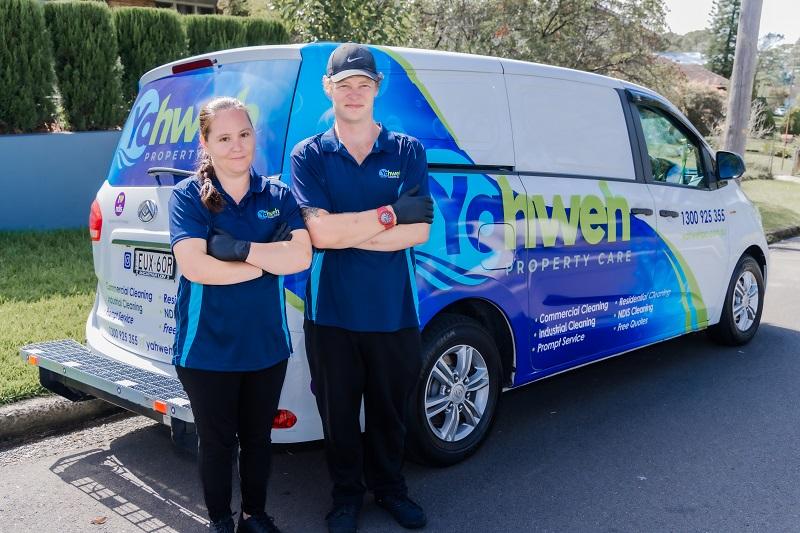
Yahweh PC provides commercial cleaning services in Sydney. Discuss your premises, operating hours and priority tasks with the team, then ask what methods and service arrangements they recommend.
Confirm the scope in writing, including periodic tasks and how concerns will be addressed. The problem might be as simple as cleaners coming at the wrong times or staff having no clear way to report something that needs attention. You'll soon notice whether the changes are working by looking at how well the place is being kept and whether the cleaners are turning up and doing the job properly.
Some cleaning companies now plan their visits around how many people use a building. Others have started using sensor-equipped dispensers, robotic floor machines and apps for reporting jobs. These tools have their place, but buying into every new system doesn't necessarily make a building any cleaner. What works in a busy shopping centre may be unnecessary in a small office, so the choice should come down to what actually needs improving.
A small office might not need any fancy cleaning technology. A reliable routine and someone checking that the work gets done may be enough. New equipment or software is worth considering when there's a problem that keeps coming back, or when the information it provides will actually be put to use.
Robots can handle certain repetitive floor tasks. Detailed cleaning, site judgement and responding to unexpected problems still require people.
Ask about named products, dilution methods, packaging and waste handling. Broad environmental promises need supporting details.
Commercial cleaning is part of Yahweh PC’s Sydney services. Discuss your site with the team to establish the work and arrangements available.


 1300-925-355