
The first meeting starts in ten minutes. There are coffee rings on the table, yesterday’s lunch packaging is still in the kitchen bin, and the washroom has run out of paper towels.
None of these problems needs a complicated solution. They need someone to notice, take responsibility and put things right before they interrupt the working day.
That practical focus sits behind several office cleaning developments in 2026. For Sydney businesses comparing Workplace Cleaning Services, the useful changes involve more responsive schedules, better communication and closer attention to how employees use the building.
An office with sixty desks does not necessarily have sixty people using them every day. Cleaning requirements can change considerably between a quiet Friday and a Tuesday filled with team meetings.
Activity-based cleaning uses information about building use to help direct the work. Larger premises may use occupancy sensors. Smaller offices can start with attendance patterns, room bookings and regular inspections.
The jobs that need doing regularly should have their own set routine. If certain areas start getting dirtier than usual, the cleaners can spend a little more time on those. A busy kitchen might need another visit during the day, even when unused desks need very little.
Review the pattern after changes to staffing or office attendance. Last year’s roster may no longer suit the workplace.
Shared workstations create a particular handover problem: the next person should be able to use the space without first clearing someone else’s crumbs or sticky marks.
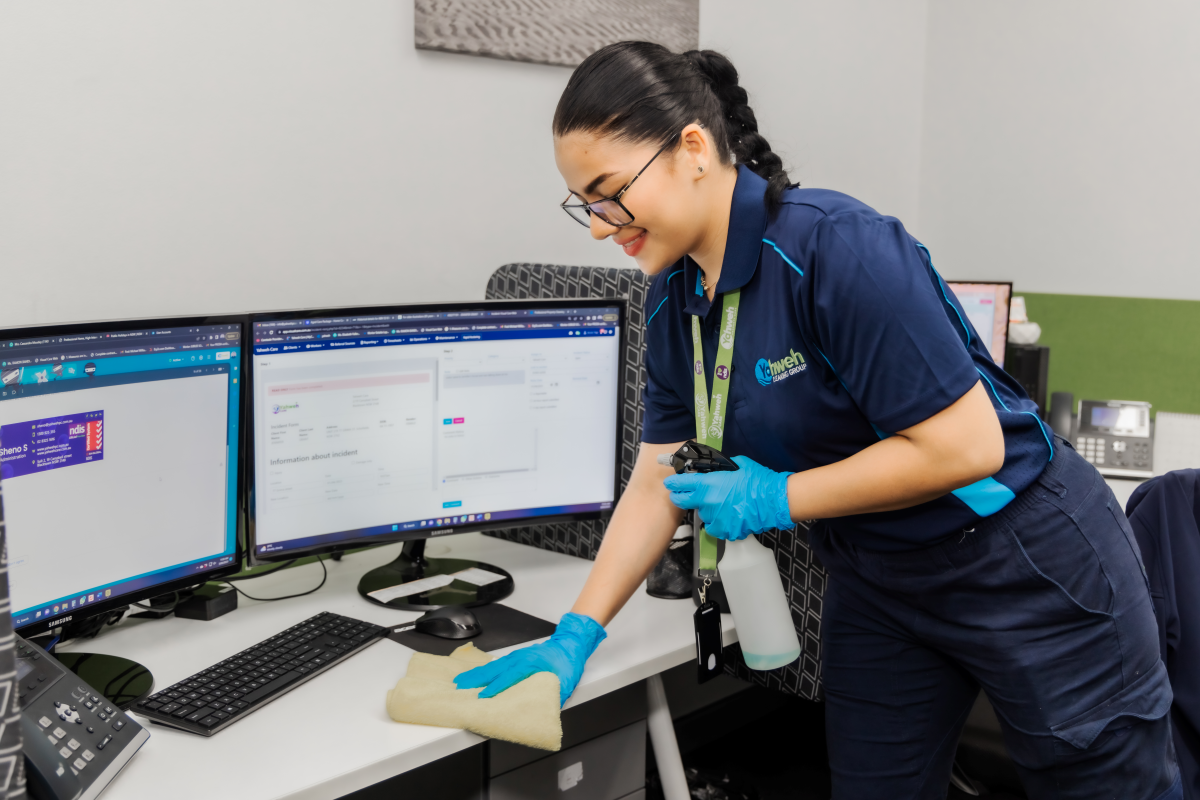
Agree on responsibility for accessible desk surfaces and shared equipment. Electronics need suitable cleaning methods, and private paperwork should remain undisturbed.
Kitchens and meeting rooms deserve equally clear arrangements. Decide who handles spills between scheduled visits and what happens after catered events. Otherwise, small jobs can sit waiting because everyone assumes somebody else will do them.
Cleaning teams need realistic access, too. A meeting room booked continuously throughout the day cannot be cleaned properly without an agreed opening in the schedule.
Connected dispensers, digital reporting and robotic floor equipment feature prominently in current cleaning industry discussions. Their value depends on the premises.
A dispenser alert may help prevent repeated soap shortages across several floors. A robotic scrubber might suit a large, open entrance area. Neither automatically improves a small office with narrow walkways and crowded rooms.
Before approving new equipment, ask for a site-specific explanation. What task will it handle? Who maintains it? How will missed areas be identified?
Trial the proposed change under normal conditions. A useful investment should produce an observable improvement, such as fewer supply shortages or more consistent floor cleaning.
A polished reception desk tells you little about indoor air quality.
Cleaning can help manage accumulated dust and remove sources of odour, but ventilation, moisture and building maintenance also affect the indoor environment. If a musty smell keeps coming back or the same patch of wall stays damp, spraying air freshener over it won't solve the problem. Find out where the moisture is coming from first.
Talk to the cleaning company about the products they use, especially if some employees are bothered by strong fragrances. What matters is using the right product, mixed to the correct strength and applied properly. A workplace doesn't have to smell of cleaning chemicals to be clean. Building managers and cleaners also need a way to exchange information. A leak spotted during an evening visit should reach someone who can arrange repairs. Cleaning alone cannot fix the underlying source of moisture.
Digital task records can help an office manager understand what happened during a cleaning visit. They are particularly useful when an area could not be accessed or a maintenance problem needs attention.
Keep reporting focused. A short note explaining that a locked room was missed gives the manager something to resolve before the next visit.
Agree on how urgent issues will be raised. A slippery spill needs a quicker response than a request to add internal windows to next month’s work.
Photographs should be used thoughtfully. Office documents, computer screens and personal belongings do not need to appear in routine cleaning records. Establish who receives reports and who follows up.
An effective cleaning service should fit the office’s working hours and activities.
Vacuuming beside a client presentation is avoidable with reasonable planning. Floor washing also needs to account for people entering the building and the time required before the area is ready for use.
Some offices benefit from evening cleaning; others need daytime checks alongside a more detailed clean outside busy hours.
Explain the access arrangements before visits begin. Security procedures, lift availability and restricted rooms can all affect how much work fits into a booking. Include replacement staff in those instructions so the service remains workable when the usual cleaner is away.
The clearest productivity benefits are practical. Employees can use a meeting room immediately, find supplies in the washroom and prepare lunch without first cleaning the bench.
Those improvements remove small interruptions. They do not establish that cleaning alone will increase output or prevent sickness absence.
Judge Workplace Cleaning Services against outcomes you can assess: recurring complaints, missed tasks and whether shared areas remain usable through the day.
Yahweh PC offers office cleaning services in Sydney. Tell the cleaning team what's been going wrong with the current service. Maybe certain areas keep getting missed, or the cleaners aren't coming often enough. Ask what they'd do to put things right. It might mean changing the time of the visits or having the cleaners come in more regularly. If things still aren't right, make sure there's someone you can contact to get them sorted. Once the new arrangement is running, see whether the things you raised have actually improved.
Activity-based schedules, connected equipment and digital reporting are prominent developments. Their usefulness depends on whether they address a specific problem at the premises.
Busy kitchens and washrooms may need attention every working day or more frequently. For the rest of the space, how often it needs cleaning comes down to how much it gets used and how dirty it becomes.
Clearing away built-up dust and being careful about which cleaning products are used can help too. Ventilation, filtration and moisture control also need attention from building management.
Choose around building use. Noisy cleaning jobs are better left until after office hours. During the day, someone can deal with spills as they happen and top up supplies before they run out.
Go through the agreement to see exactly what the cleaners will do, how often they'll come and whether anything costs extra or isn't covered. Check how they'll get into the building, too. There should be someone you can reach when the cleaners miss a job or something needs fixing straight away, rather than having to chase different people for an answer.


 1300-925-355